Mary, Mother of God — Theotokos and the Council of Ephesus
One of the most misunderstood titles given to Mary is:
Mother of God
For many Christians, especially those unfamiliar with Catholic or Orthodox teaching, the title immediately raises questions.
How can Mary be the Mother of God?
God is eternal.
God existed before Mary.
Mary did not create God.
So what exactly does the Church mean when it calls Mary Mother of God?
The answer is crucial, because this title is not primarily about elevating Mary.
It is about protecting the truth of who Jesus Christ is.
The ancient Christian title for Mary is:
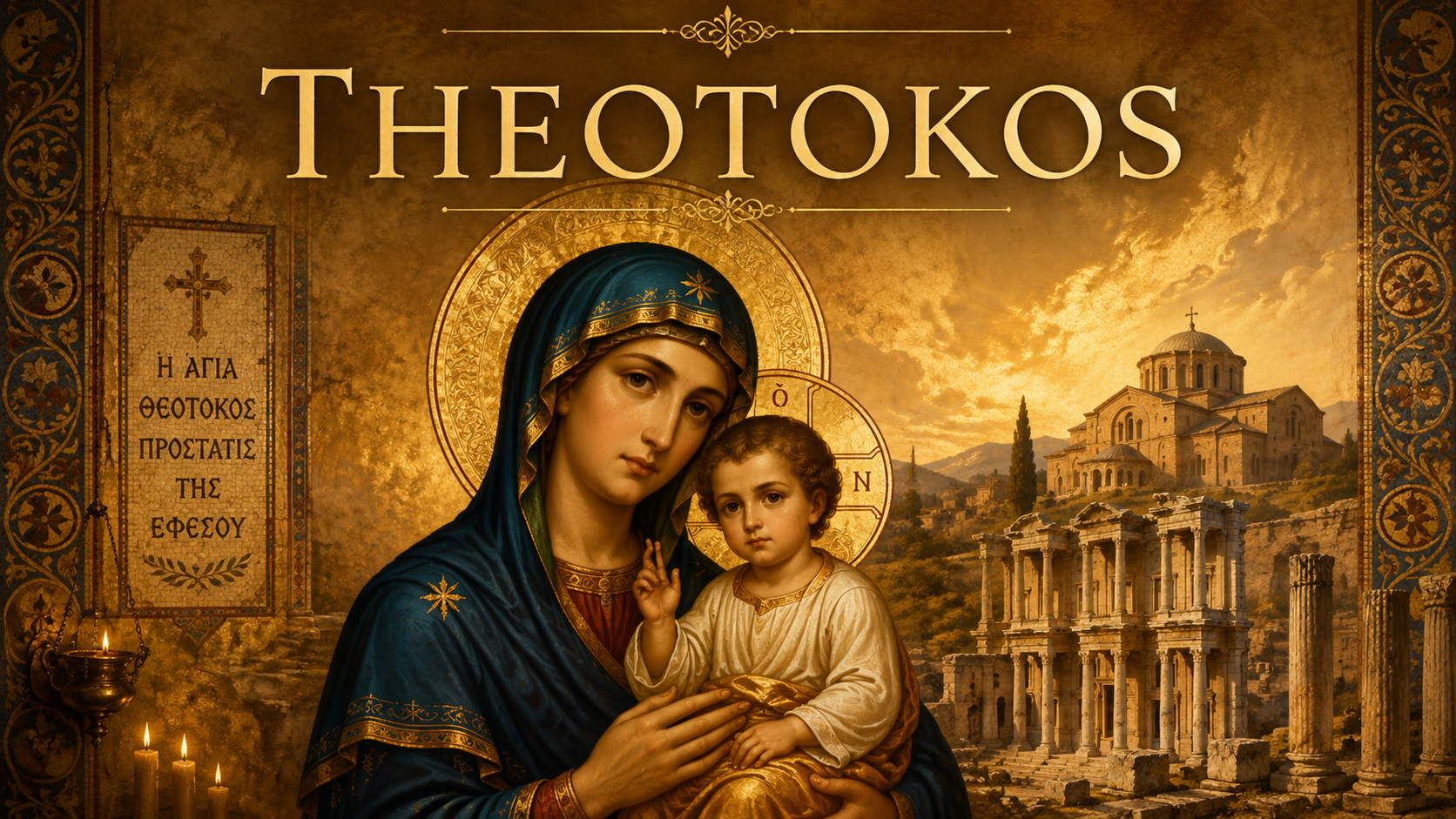
Θεοτόκος — Theotokos
usually translated:
Mother of God
or, more literally:
God-bearer
The Church does not mean that Mary existed before God.
It does not mean that Mary created the divine nature.
It does not mean that Mary is the mother of the Father or of the Holy Spirit.
And it certainly does not mean that Mary herself is divine.
The title means something much simpler:
The child Mary carried in her womb and gave birth to is Jesus Christ — and Jesus Christ is God.
That is why the title Theotokos became so important in the early Church.
The question was never simply:
“What should we call Mary?”
The deeper question was:
“Who is Jesus Christ?”
And that question would eventually bring the bishops of the Church together at Ephesus in AD 431.
It is a statement about Jesus Christ.
And that is precisely why the early Church fought so strongly to defend it.
What Does Theotokos Mean?
The ancient Greek title given to Mary is:
Θεοτόκος — Theotokos
It is traditionally translated:
Mother of God
or literally in the sense of:
God-bearer
The Church does not mean that Mary existed before God.
It does not mean Mary created the divine nature.
It does not mean Mary is the mother of the Father or the Holy Spirit.
And it certainly does not mean that Mary herself is divine.
The title refers to one fundamental Christian truth:
The child Mary carried and gave birth to is God.
That child is Jesus Christ.
And Jesus Christ is not merely a human being whom God later adopted, inhabited or joined Himself to.
He is the eternal Son of God who truly became man.
The Catechism explains that the one conceived in Mary’s womb according to the flesh was none other than the Father’s eternal Son; therefore the Church confesses Mary as truly Mother of God — Theotokos.
Scripture Already Gives Us the Foundation
The title Theotokos itself does not appear in the New Testament.
But the truth expressed by the title certainly does.
At the Annunciation Gabriel tells Mary:
“The Holy Spirit will come upon you, and the power of the Most High will overshadow you; therefore the child to be born will be called holy, the Son of God.”
— Luke 1:35
Mary is going to give birth to:
The Son of God.
Then, shortly afterward, Mary visits Elizabeth.
Elizabeth is filled with the Holy Spirit and cries out:
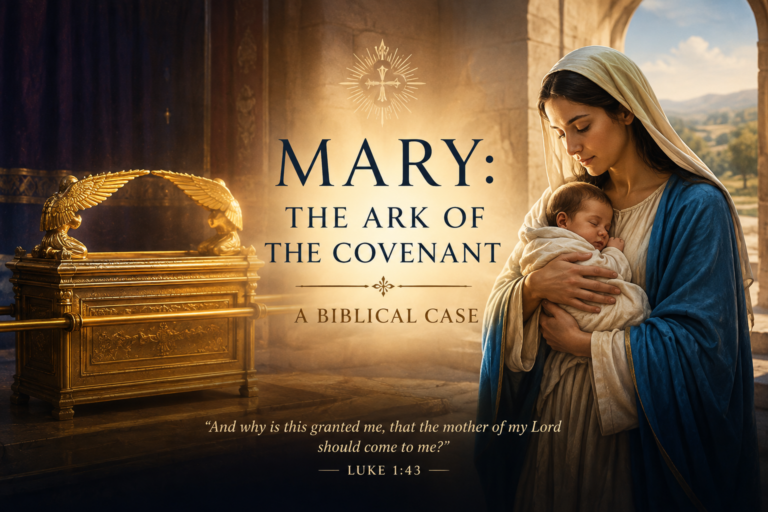
“And why is this granted me, that the mother of my Lord should come to me?”
— Luke 1:43
Notice what Elizabeth says.
She does not merely call Mary:
“the mother of Jesus.”
She calls her:
“the mother of my Lord.”
The Catechism itself points directly to this verse when explaining Mary’s divine motherhood.
And this happens before Jesus has even been born.
Mary is already recognised as the mother of the Lord she carries.
Who Is Mary’s Son?
This is where the argument becomes unavoidable.
Ask three simple questions.
Who did Mary give birth to?
Jesus Christ.
Who is Jesus Christ?
The eternal Son of God made flesh.
Therefore, who is Mary the mother of?
Jesus Christ — who is God.
Therefore Christians can rightly call Mary:
Mother of God
This does not mean Mary is the origin of Christ’s divinity.
The Son existed eternally with the Father.
St John begins his Gospel:
“In the beginning was the Word, and the Word was with God, and the Word was God.”
— John 1:1
And then:
“The Word became flesh.”
— John 1:14
Mary did not cause the Word to exist.
She gave Him His human nature when the eternal Word became flesh.
But the person born from Mary is the same divine Person who existed eternally with the Father.
Mary Is the Mother of a Person — Not a Nature
This distinction is extremely important.
Sometimes an objection is made:
“Mary is only the mother of Jesus’ human nature. She is not the Mother of God.”
But mothers do not give birth to natures.
They give birth to persons.
Your mother is not merely the mother of your body.
She is your mother.
In the same way, Mary did not give birth to an abstract “human nature.”
She gave birth to:
Jesus Christ.
And Jesus Christ is one divine Person possessing both a divine nature and a human nature.
The Catechism explains that Christ’s humanity has no separate personal subject apart from the eternal Son. The humanity He received from Mary belongs to the divine Person of the Son Himself.
This is the heart of the issue.
The Controversy That Shook the Early Church
By the fifth century, a serious controversy arose concerning exactly this question.
The controversy became associated especially with:
Nestorius
Nestorius was Archbishop of Constantinople.
The dispute concerned how Christians should speak about the union between Christ’s humanity and His divinity.
The danger was that Christ could be spoken about almost as though there were one human subject and another divine subject, joined together.
The Church recognised that this threatened the unity of Christ Himself.
The Catechism describes the Nestorian error as regarding Christ as a human person joined to the divine Person of God’s Son.
Against this stood one of the great defenders of orthodox Christology:
St Cyril of Alexandria
Cyril insisted that the Jesus born of Mary is the same eternal Word of God who became flesh.
There are not two Sons.
There are not two Christs.
There is:
One Jesus Christ.
True God.
True man.
Why “Mother of God” Became So Important
This is why the argument over Mary’s title became so serious.
If Mary could only be called the mother of a separate human Jesus, then what exactly was the relationship between that man and the eternal Son of God?
But if the child born from Mary is genuinely:
God the Son made man
then Mary can genuinely be called:
Theotokos — Mother of God.
The title was therefore defending something far greater than a Marian devotion.
It was defending the Incarnation.
Pope Benedict XVI later described Theotokos precisely in this Christological context: the title expresses the unity of Christ’s human and divine reality in the one Son.
The Council of Ephesus — AD 431
The controversy eventually led bishops from across the Christian world to gather in the city of:
Ephesus
in:
AD 431
This became the Third Ecumenical Council.
The Council defended the teaching associated with St Cyril and affirmed that Mary could rightly be called:
Theotokos
because the one conceived and born from her according to the flesh is the eternal Son of God.
The Catechism explains that the Council confessed that the Word united human nature to Himself personally and that, for precisely this reason, Mary truly became the Mother of God.
This is an important point.
The Council was not declaring that Mary created God.
It was declaring that:
Jesus is God.
The person Mary gave birth to is the eternal Son.
Ephesus Did Not Invent the Title
Sometimes the Council of Ephesus is presented as though a group of bishops suddenly invented the idea of calling Mary Mother of God in AD 431.
That is not what happened.
The title was already known among Christians before the Council.
Benedict XVI noted that Theotokos had already taken root in Christian devotion from at least the third century, long before the bishops assembled at Ephesus.
The Council did not invent a new Jesus.
Nor did it suddenly invent a new Mary.
It formally defended the implications of a belief Christians already held:
The eternal Son of God truly became man.
The Ruins of Ephesus — History You Can Still See
There is something particularly striking about the Council of Ephesus.
This is not merely a name from an old theology book.
Ephesus still exists.
The ruins of the ancient city can still be visited in modern-day Türkiye.
Among them are the remains of an ancient Christian basilica traditionally known as:
The Church of Mary
or:
The Double Church
Turkish cultural authorities identify this church as the place where the Council of Ephesus convened in AD 431. The site subsequently underwent further construction and alteration, but the surviving ruins remain part of the physical landscape of early Christianity at Ephesus.
UNESCO also recognises Ephesus as the site of the important early Church councils of 431 and 449, and specifically notes the ruins of the Church of Mary among the monuments witnessing Ephesus’s importance to Christianity.
For me, that makes Ephesus particularly powerful.
You can walk among the stones of the city where bishops gathered more than 1,500 years ago to debate one of the central questions of Christianity:
Who is Jesus Christ?
The ruins do not, by themselves, prove that Theotokos is theologically true.
Archaeology cannot prove a doctrine in the same way Scripture and theological reasoning can.
But the ruins are historical evidence.
They testify that the city was real.
The ancient Christian community was real.
The council was a real historical event.
And the remains of the Church of Mary give us a physical connection to the world in which the Church publicly defended Mary as:
Theotokos — Mother of God.
That matters.
Christianity is not built around an abstract mythology detached from history.
It makes claims about events that occurred in real places, among real people, in the world we still inhabit.
And at Ephesus, some of that world is still standing.
Imagine Standing There in AD 431
Imagine Ephesus in the fifth century.
Bishops have travelled enormous distances.
The theological controversy has spread throughout the Christian world.
The question before them is not whether Mary deserves another honour.
The real question is:
Who was in Mary’s womb?
Was He merely a human being closely associated with God?
Or was He:
God the Son made flesh?
The Church answered decisively.
The child Mary carried was not a separate human person alongside the eternal Word.
He was:
Jesus Christ — one Person, truly God and truly man.
Therefore the woman who gave birth to Him could properly be called:
Theotokos.
The Christians of Ephesus Rejoiced
The decision of the Council was received with enormous enthusiasm.
Later Catholic accounts record the Christian population of Ephesus celebrating the bishops’ defence of Theotokos and accompanying them through the city with lights and rejoicing. Pope Paul VI recalled this ancient tradition when discussing the Council and Mary’s title.
Why such excitement?
Because ordinary Christians understood what was ultimately being protected.
Not merely Mary.
Christ.
If the Son born from Mary is truly God, then the Incarnation is real.
God truly entered human history.
God truly took flesh.
God truly was born.
God truly suffered in His humanity.
And God truly accomplished our salvation.
“But God Cannot Have a Mother”
This objection sounds powerful until we ask what Catholics actually mean.
Catholics do not claim:
“Mary caused God to begin existing.”
Obviously not.
God is eternal.
The Son has always existed.
Nor do Catholics believe Mary is the mother of:
- God the Father
- God the Holy Spirit
- the divine nature itself
- the Holy Trinity
Mary is the mother of:
God the Son according to His humanity.
The Person born from her is a divine Person.
Therefore:
Mary is the Mother of God.
Pope John Paul II expressed this point clearly: motherhood concerns the person, not simply a body or an isolated nature; since Mary’s Son is the Son of God, she is truly Theotokos.
“But Doesn’t Calling Mary Mother of God Make Her Divine?”
No.
Calling Mary the Mother of God does not make Mary God any more than calling Elizabeth the mother of John the Baptist makes Elizabeth a prophet.
Motherhood tells us something about the relationship between a mother and her child.
It does not mean that mother and child possess the same nature.
Mary remains:
A human creature.
Jesus Christ is:
A divine Person who assumed a human nature.
The greatness of Mary comes entirely from what God did in her and through her.
The Title Is Really About Jesus
This is perhaps the most important point of the entire article.
When Catholics say:
Mary, Mother of God
we are ultimately making a confession about:
Jesus.
We are saying that the baby lying in the manger is not merely a holy man.
He is not merely a prophet.
He is not a human being whom God later adopted.
He is:
The eternal Word made flesh.
The hands Mary held were human hands.
The face she looked upon was a human face.
The child she carried possessed a truly human body and a truly human soul.
But the Person whose hands, face, body and soul these were was:
God the Son.
That is Theotokos.
Elizabeth Said It Before Ephesus Did
And this brings us right back to Scripture.
Long before the bishops gathered at Ephesus, Elizabeth stood before Mary.
Luke tells us that Elizabeth was:
“filled with the Holy Spirit.”
And under the inspiration of the Holy Spirit she asked:
“Why is this granted me, that the mother of my Lord should come to me?”
— Luke 1:43
The Council of Ephesus did not overturn Scripture.
It defended its implications.
The woman standing before Elizabeth was carrying the Lord.
And therefore she truly was:
The Mother of the Lord.
Theotokos.
Mother of God.
Ephesus Still Bears Witness
Nearly sixteen centuries have passed since the bishops met at Ephesus.
Empires have risen and disappeared.
Much of the ancient city has fallen into ruin.
But the stones remain.
The ancient streets remain.
The remains of the Church of Mary remain.
And those ruins bring us physically close to one of the defining moments in Christian history.
They remind us that the early Church really wrestled with these questions.
And the question at Ephesus was ultimately the same question Jesus asked His disciples:
“Who do you say that I am?”
The answer of the Church was clear.
Jesus Christ is:
True God.
True man.
One Lord.
One Son.
And because the eternal Son truly took flesh from Mary and was truly born from her:
Mary is truly Theotokos — the Mother of God.
Far from taking glory away from Jesus, the title exists to defend exactly who Jesus is.